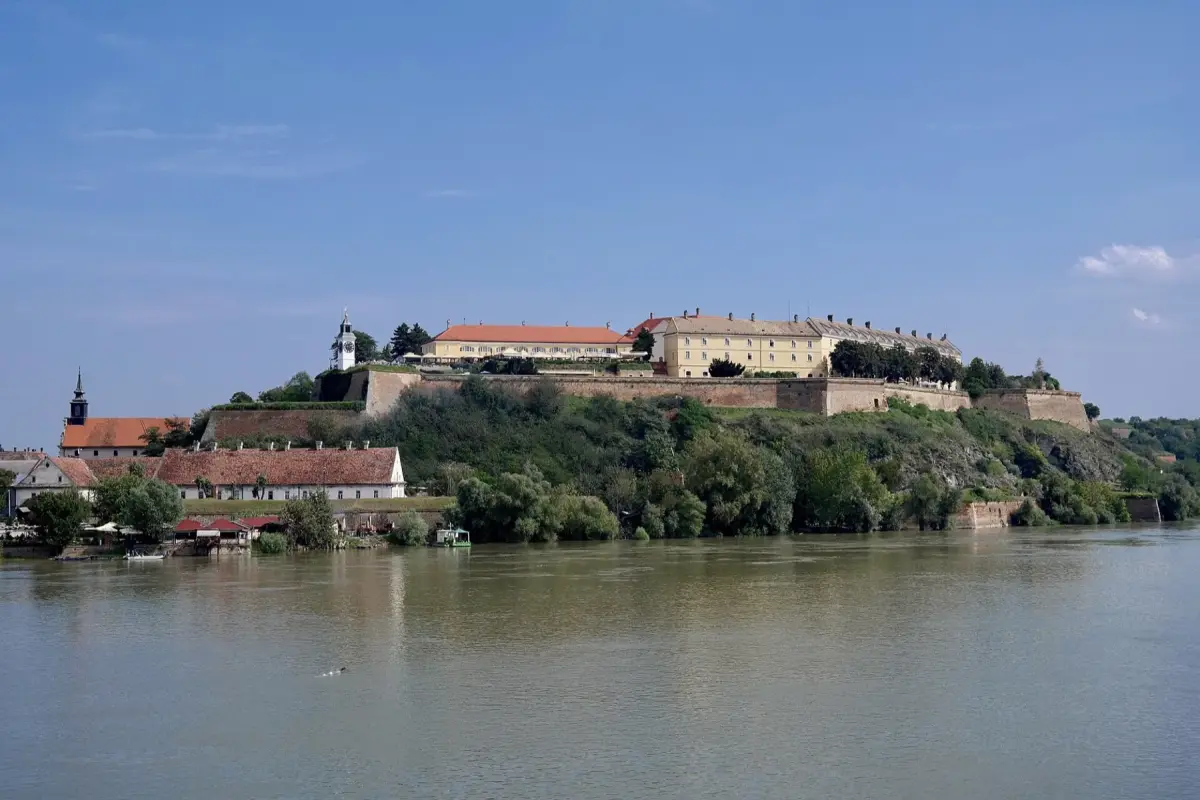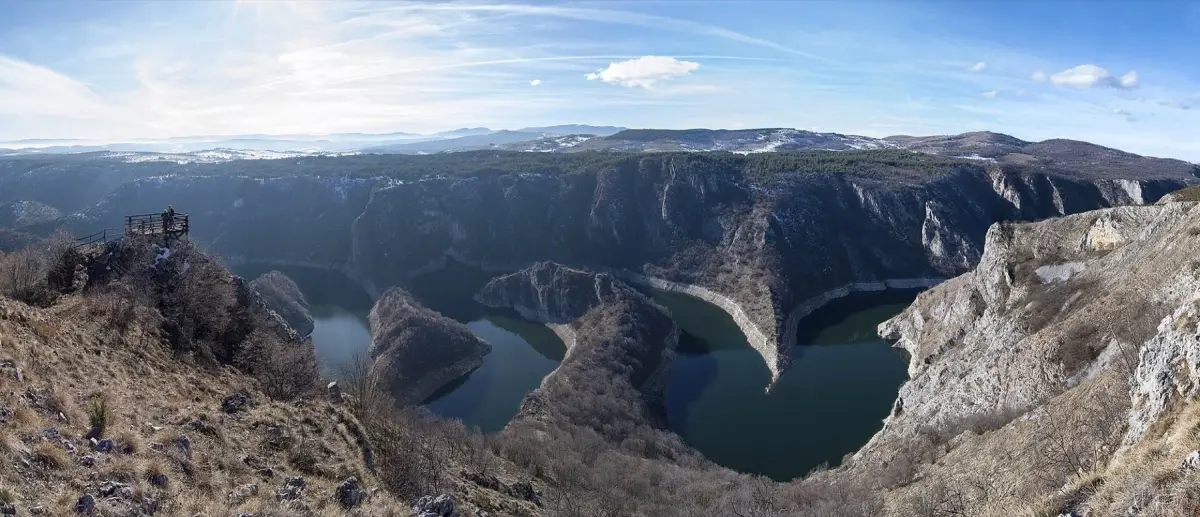
A medieval fortress, an 8,000-year-old settlement and a spectacular gorge, all bound together by one river.
Some journeys are all about reaching the destination.
Others become memorable the moment you start the engine.
This route from Belgrade belongs to the second kind.
In just two days, you’ll walk the walls of a medieval fortress, visit a place where people lived eight thousand years ago, drive along one of the Danube’s most spectacular stretches, and find yourself inside a gorge that nature began shaping long before humans ever appeared.
What makes this journey remarkable isn’t the number of places you can fit into a weekend.
It’s that all of them exist side by side because of one river.
The Danube ties them together into a single story.
Stone Above the River
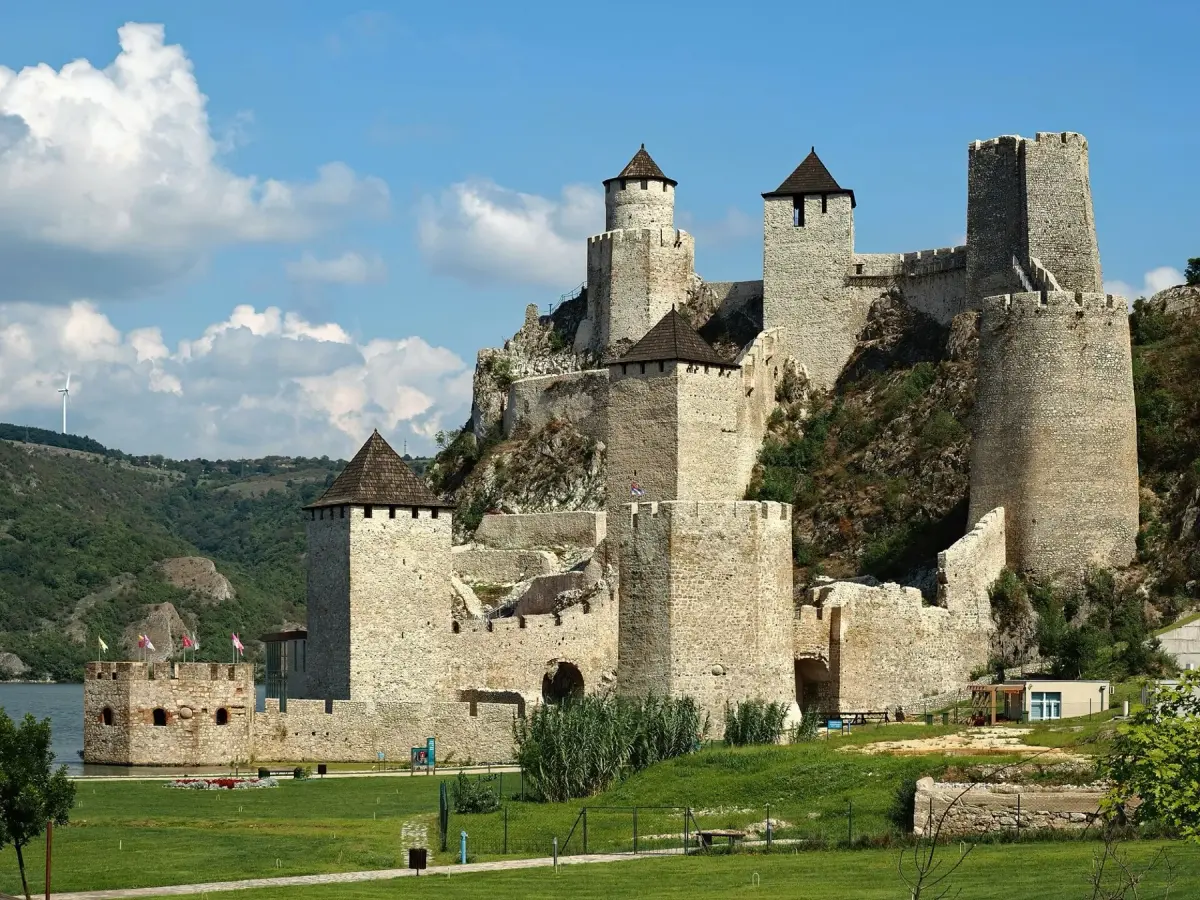
Your first impression begins before you even enter Golubac Fortress.
Unlike many European castles perched on isolated hilltops, this one seems to grow directly out of the grey cliffs, with the Danube becoming an extension of its walls.
For centuries, the river was more than a waterway—it was a frontier worth defending.
Today, it’s difficult to imagine that this fortress once controlled traffic along the Danube.
Now you hear conversations instead of battle cries.
Cameras click where soldiers once stood, and families wander peacefully along the walls.
Yet the fortress still achieves exactly what it was built to do.
It feels almost impossible to conquer.
Allow around an hour and a half for your visit.
For most travellers, the Green Zone is more than enough, offering access to the main towers, the inner courtyard, and the finest river views.
The more demanding routes require good fitness and are far from essential, especially with the rest of Đerdap still ahead.
There is no need to rush.
Have a coffee beside the Danube.
Take one last look at the fortress from outside.
Only then continue your drive.
One of the greatest pleasures of this route is never feeling that you’re racing towards the next stop.
The Shore Chosen First
Soon, the fortress disappears in the rear-view mirror.
The road continues beside the river.
Water sparkles on your right.
Wooded hills rise on your left.
The scenery changes so gradually that you notice it only after dozens of kilometres.
The next stop is Lepenski Vir.
At first glance, it hardly looks like a place worth leaving the main road for.
There are no towers, no dramatic panoramas.
That is precisely why it leaves such a lasting impression.
Long before Europe’s first cities existed, people were already living on this stretch of riverbank.
“Long before Europe’s first cities existed, people were already living on this stretch of riverbank.”
They built homes, caught fish in the Danube, and looked out every day at the very same river flowing past you now.
You don’t need to love archaeology to appreciate this place.
One thought is enough:
Thousands of years ago, someone else chose this exact bend of the Danube as home.
An hour is usually enough for the museum.
History enthusiasts may wish to stay longer.
If nature is your main reason for travelling, Lepenski Vir becomes a short but surprisingly meaningful stop that quietly adds another layer to the journey.
When Nature Becomes the Architect
After Lepenski Vir, the route changes once again.
The road presses closer to the cliffs.
The mountains grow higher.
The Danube slowly begins to lose its familiar width.
It feels as though the river is being gently drawn into stone.
This is Đerdap.
Here, it’s surprisingly easy to forget that only a few hours earlier you were walking through a medieval fortress.
Now the greatest architect is no longer human.
The true wonder of this landscape isn’t its fortresses or its roads.
It is the valley itself.
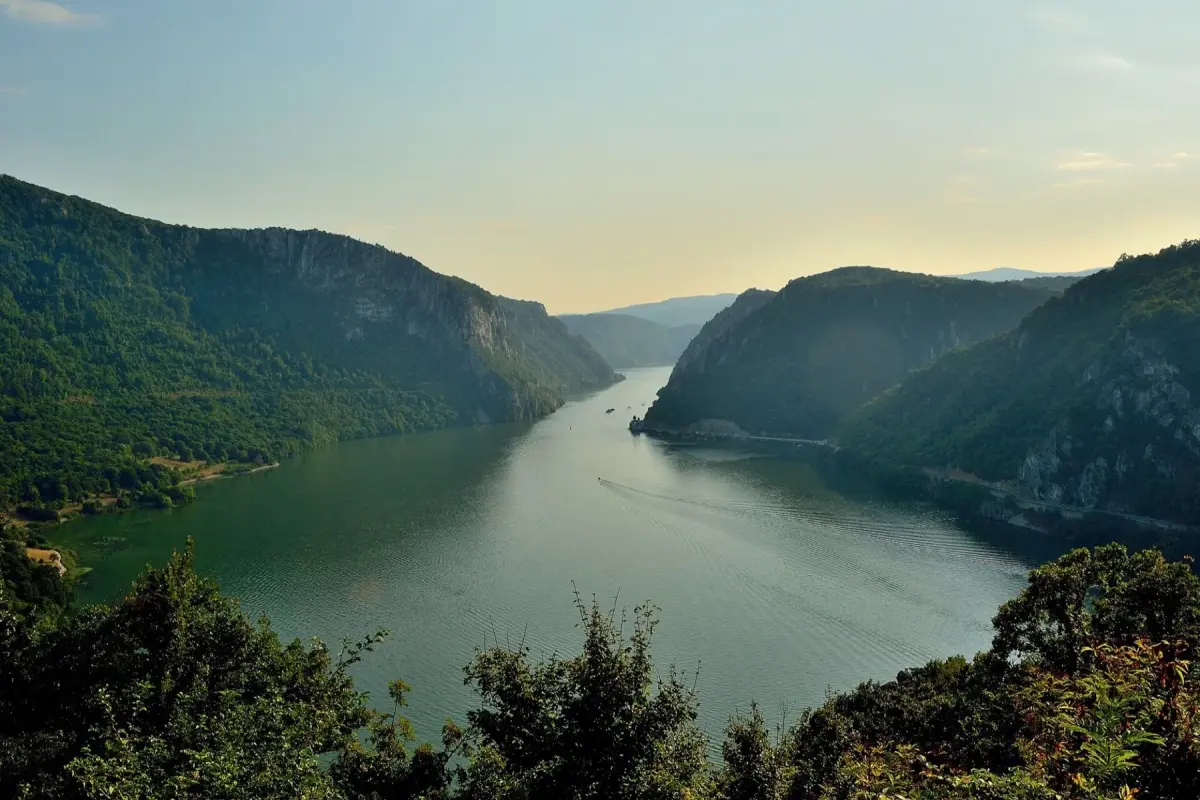
For millions of years, the Danube slowly carved through limestone mountains, creating one of Europe’s most spectacular gorges.
The most dramatic section is the Kazan Gorge.
Here, the river becomes unusually narrow and remarkably deep.
Towering cliffs close in from both sides until one of Europe’s greatest rivers suddenly feels almost intimate.
This is one of those rare places where photographs simply cannot convey the scale.
Two Different Journeys
From here, the trip can continue in two very different ways.
If you’d like to experience the Danube from within, take a boat trip.
From the water, Đerdap becomes an entirely different landscape.
The cliffs rise much higher than they appeared from the road.
You’ll pass Trajan’s Tablet, carved into the rock by the Romans, the Mraconia Monastery on the opposite bank, and the enormous sculpture of King Decebalus.
The journey no longer feels like travelling beside the river.
Instead, you are travelling inside it.
If, on the other hand, you’d rather appreciate the full scale of the gorge at once, head for the Ploče Viewpoint.
The hike takes several hours, but the reward explains why Đerdap is considered one of Serbia’s most beautiful landscapes.
From here, you see not a single bend in the river but an immense composition of water, forests, and cliffs.
Experienced hikers may also consider the trails to Mali Štrbac or Veliki Štrbac.
They are even more spectacular but require considerably more time and energy.
It is best to treat them as adventures of their own rather than additions to an already full day.
Evening Beside the Danube
The best place to spend the night is Donji Milanovac.
It doesn’t try to impress visitors with famous monuments.
That is exactly its charm.
After a full day, it feels good simply to stroll along the promenade, enjoy freshly prepared fish for dinner, watch the river grow darker, and have nowhere else you need to be.
That is why we recommend not returning to Belgrade the same evening.
What makes this weekend memorable isn’t the number of places you visit.
It’s the time between them.
Time to drive slowly.
To stop at official viewpoints.
To watch the river.
To notice the changing light.
To realise that the strongest memories are not created only at famous landmarks.
Making the Most of It
If you only have one day, it is better to limit your itinerary to Golubac Fortress and continue as far as Lepenski Vir or Donji Milanovac.
Trying to add a boat tour, the museum, and a long hike will almost certainly turn the day into a race.
With an overnight stay, everything changes.
You’ll have time to choose between the boat trip and the viewpoints, enjoy lunch without rushing, and experience Đerdap without constantly checking the clock.
Before travelling, be sure to check Golubac Fortress’s opening hours, as they change seasonally and the fortress is closed on Mondays.
If you plan to take a boat tour, reserve it in advance and confirm the exact route—not every excursion passes through the entire Kazan Gorge.
If you intend to hike the official trails within Đerdap National Park, check the current access rules and any guiding requirements beforehand.
The River That Connects Time
By the end of the journey, you begin to notice something unusual.
It feels as though several eras continue to exist here at the same time.
The fortress still watches over the Danube much as it did centuries ago.
The traces of the first inhabitants remain on the same stretch of riverbank.
The river continues flowing through a gorge it began carving long before humans ever existed.
And today’s travellers, just like those thousands of years ago, still find themselves stopping here for exactly the same reason:
Some places are simply impossible to drive past.
Perhaps that is why these weekends stay with you.
Not because of the number of attractions.
Not because of the photographs.
But because, over the course of two days, you have touched several different moments in time—all of them still living quietly beside the same river.