A hundred kilometres between Golubac and Kladovo, measured in fortresses and river bends rather than minutes.
Sometimes the best souvenirs from a journey are practical recommendations—where to hike, what to see, where to eat.
After driving through Đerdap, people remember something else.
They remember stopping again and again, even though they had planned to keep driving.
On the map, it looks straightforward enough.
A road follows the Danube from Golubac towards Kladovo.
But once you’re there, distance stops being measured in kilometres.
Instead, it’s measured in fortresses, tunnels, river bends, short walks, and unplanned stops that somehow last much longer than expected.
One Hundred Kilometres Between River and Mountains
Đerdap is not a single attraction, nor even a single gorge.
The national park stretches for almost 100 kilometres along Serbia’s bank of the Danube, from Golubac Fortress to the Karataš area near Kladovo.
Within that long landscape, wide river basins give way to narrow passages between cliffs, forested hillsides, small towns, and places where people lived thousands of years before the modern road existed.
The geography reveals itself most naturally when travelling from west to east.
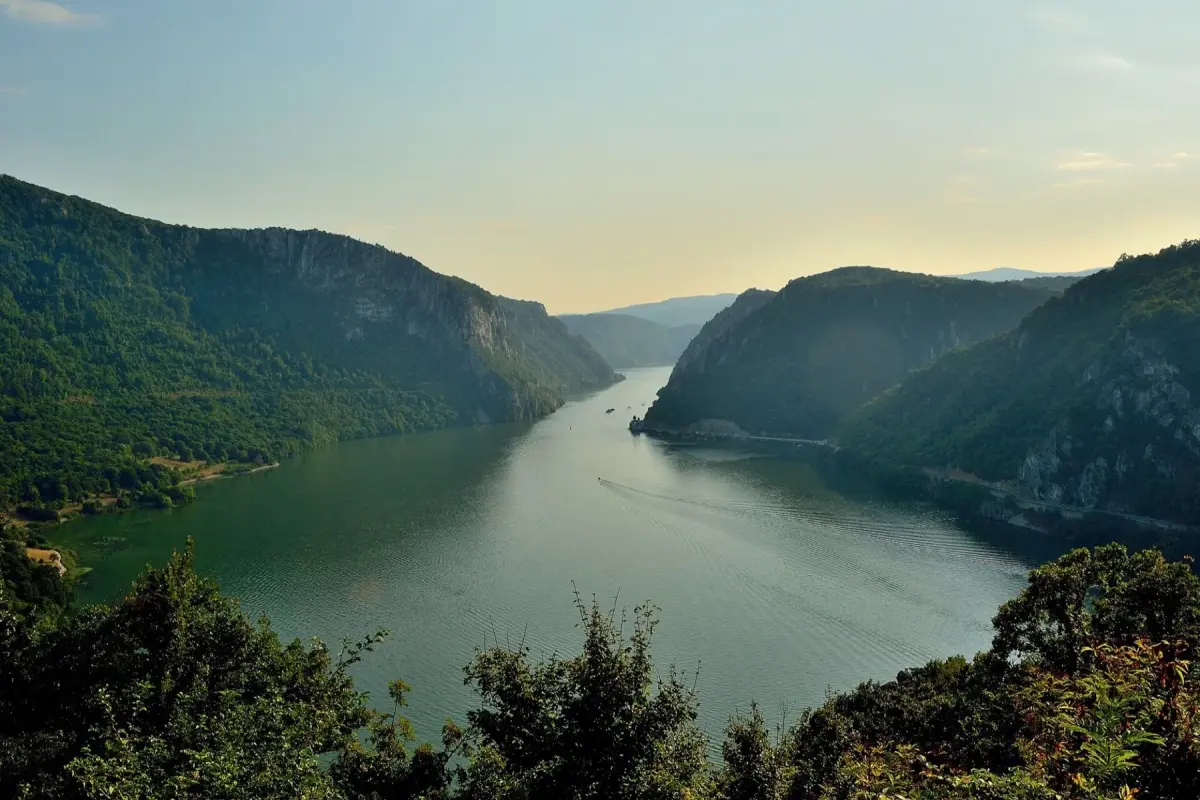
Near Golubac, the Danube feels almost impossibly wide.
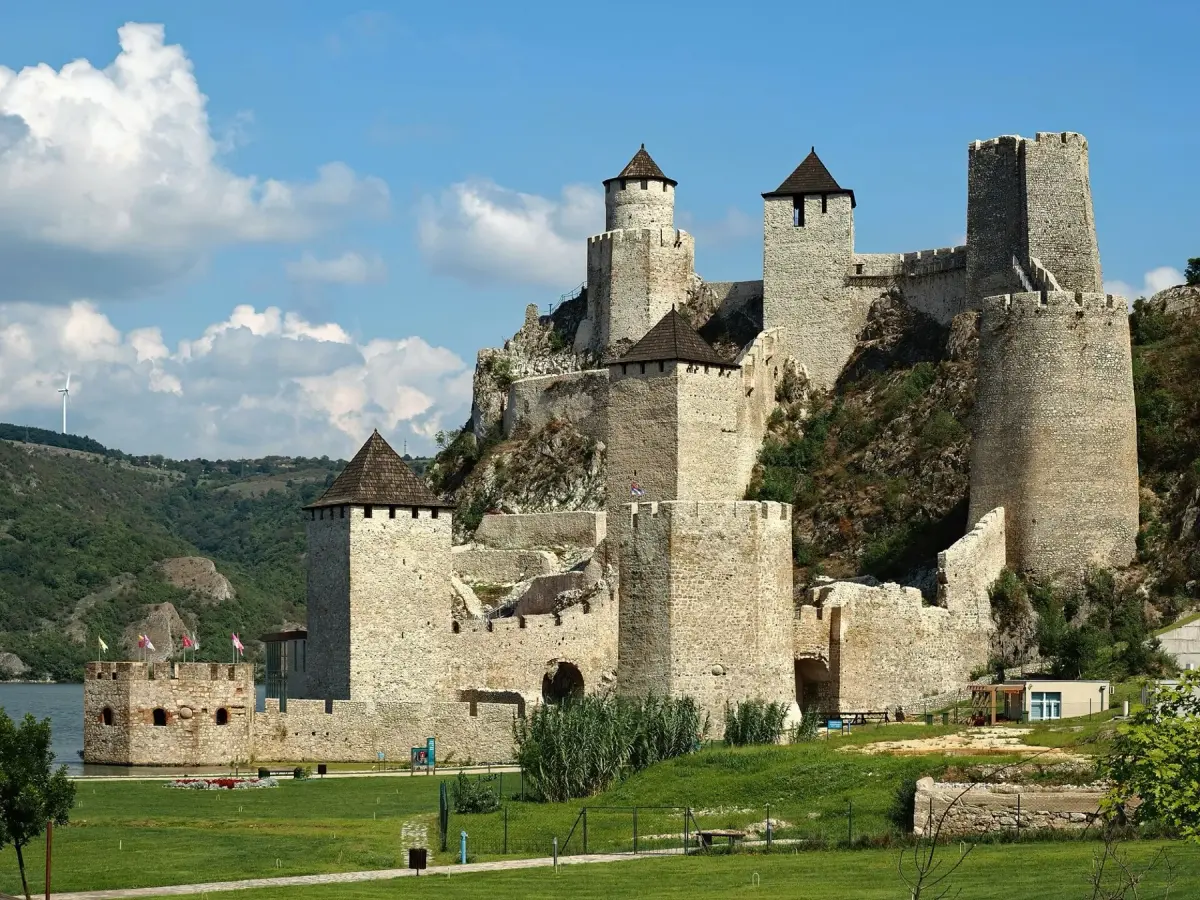
The fortress stands beside the water as though it has grown directly out of the rocky shoreline, marking the point where the familiar river slowly begins transforming into something mountainous.
Further on, the banks move closer together.
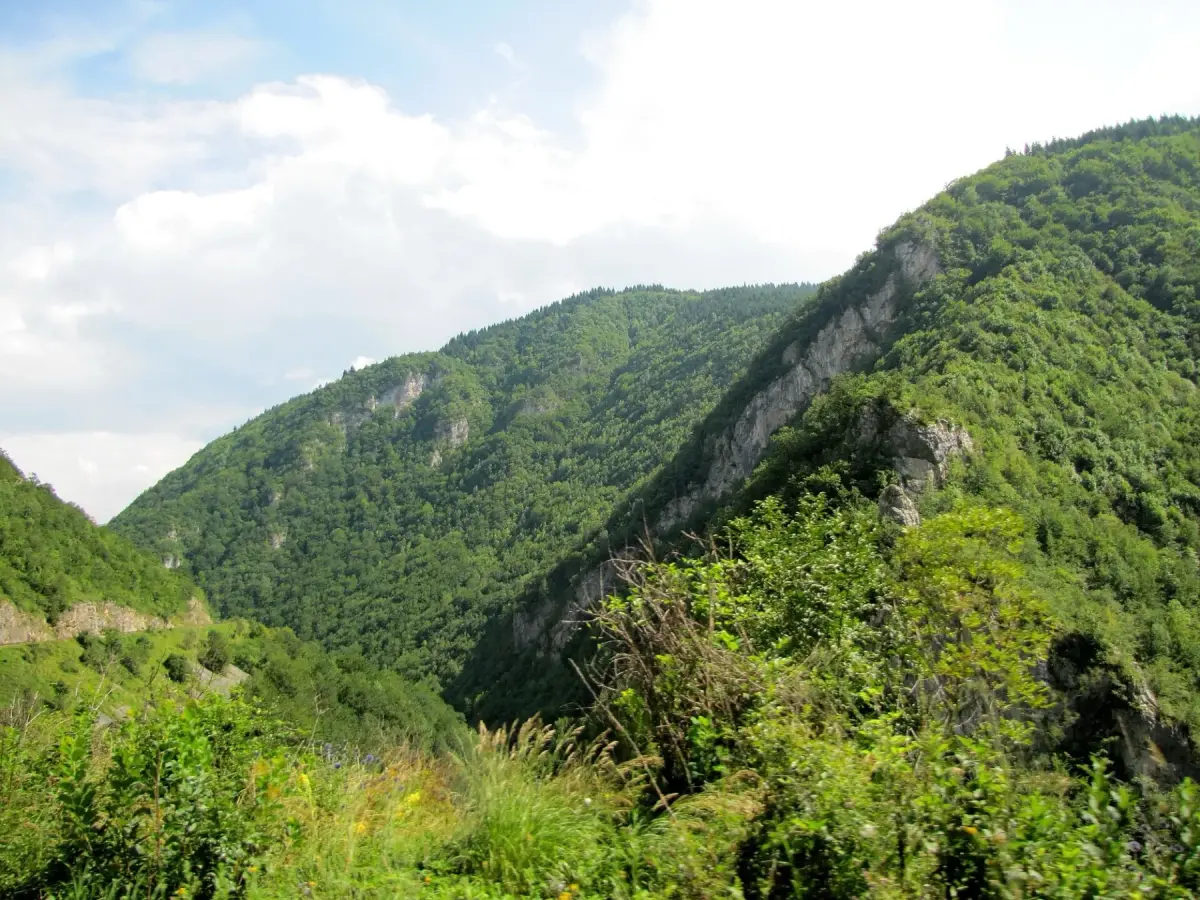
The road disappears into wooded slopes.
Tunnels begin to appear.
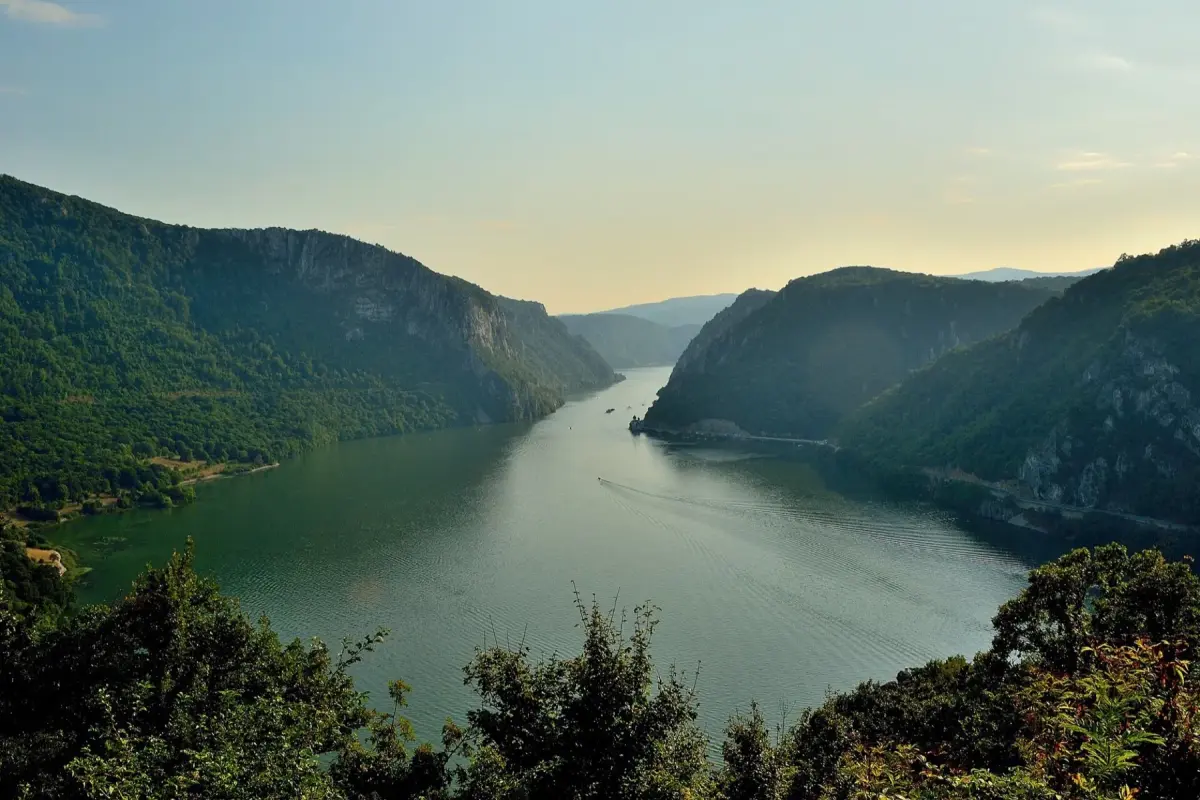
Near the Kazan Gorge, the landscape tightens so dramatically that the Danube no longer feels like a broad European river but like an immense force squeezing its way between mountains.
Photographs capture the beauty of Đerdap.
They almost always reduce its scale.
In a single frame, the river, the cliffs, and the road fit comfortably together.
Standing there in person, your eyes struggle to take everything in at once.
Even one of Europe’s largest rivers can seem like a narrow ribbon of water between towering slopes.
A Road Without One Defining View
Many famous places are known for one iconic viewpoint.
Đerdap isn’t.
You might stop at Golubac Fortress and think you’ve already found the journey’s defining image.
Then the road winds through green hillsides, reveals the Danube from a new elevation, dives into another tunnel, and emerges beside a landscape that makes the previous panorama feel like only the beginning.
That is why Đerdap cannot be understood from a single viewpoint.
It unfolds gradually—from the wide Danube near Golubac, to the archaeological landscape of Lepenski Vir, the calm waters around Donji Milanovac, and finally the dramatic narrows of the Kazan Gorge.
Not every roadside viewpoint is spectacular.
But searching for the next one becomes part of the journey itself.
Your navigation app doesn’t understand any of this.
It calculates distance and driving time as though this were simply another road between two towns.
It has no way of knowing how many times you’ll pull over, walk down to the water, or simply stand at the guardrail for a few extra minutes.
What You’ll Find Along the Danube Besides the Road
The best place to begin is Golubac Fortress.
It stands where the Danube reaches almost sea-like proportions, appearing from a distance as though it were part of the cliff itself.
This is far more than a backdrop for a quick photograph.
Inside, you can walk the fortifications, climb between the towers, and understand why this location controlled river traffic for centuries.
Allow at least one and a half to two hours for your visit, and check opening hours before travelling.
Some parts of the fortress require good physical fitness and are accessible only with guided supervision.
Further along the road lies Lepenski Vir, a place that completely changes your sense of how long people have lived beside the Danube.
One of Europe’s earliest permanent settlements once stood here.
People chose this riverbank long before fortresses, roads, or modern borders existed.
They built homes, caught fish, carved remarkable stone sculptures, and shaped their lives around the rhythm of the river.
Visiting the archaeological site usually takes around one to one and a half hours.
Afterwards, Đerdap no longer feels like simply a beautiful scenic drive.
You begin to understand that people didn’t merely pass through this gorge for thousands of years.
They stayed.
Between these major landmarks are countless shorter stops.
“Between these major landmarks are countless shorter stops.”
One example is the trail through Boljetin Gorge, ideal for travellers who want to leave the road briefly without committing half a day to a demanding hike.
These smaller walks are especially valuable in Đerdap.
They reveal not only panoramic views of the Danube but also the park’s quieter details—its forests, rocks, streams, and narrow canyons that are almost invisible from the road.
To See the Gorge, You Have to Climb Above It
From the road, Đerdap reveals itself only in fragments.
One bend shows the river.
The next reveals cliffs.
Another offers nothing but the dark entrance to a tunnel.
To finally understand how those fragments connect, you have to climb higher.
The easiest option is Kovilovo.
It’s a relatively short hike for travellers who want a panoramic viewpoint without sacrificing most of the day.
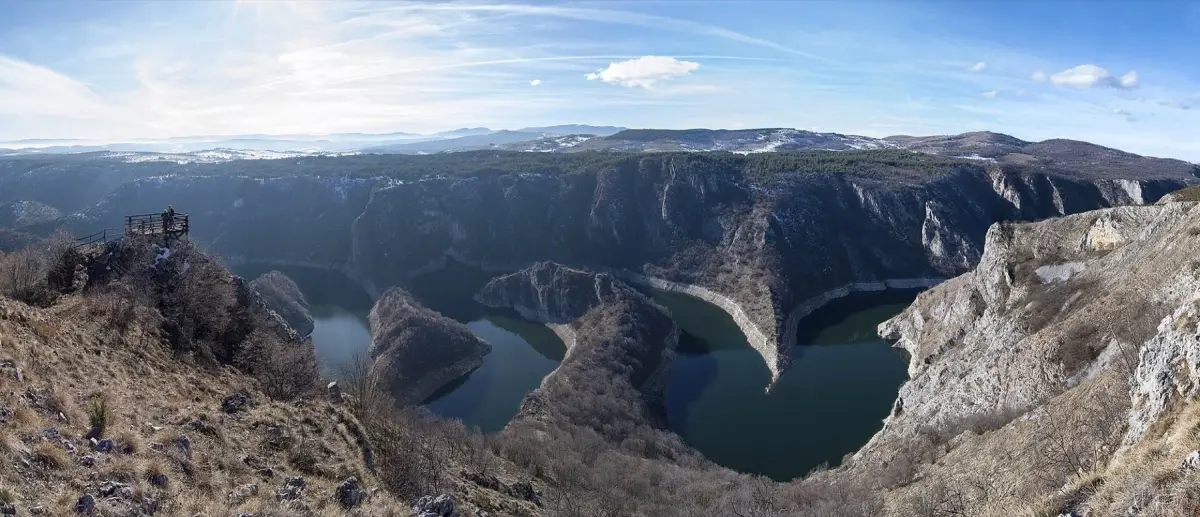
From here, you overlook the Donji Milanovac Basin, gaining a much clearer sense of how far the national park stretches along the river.
Ploče requires considerably more effort but is arguably the best choice for most visitors.
The trail leads to several viewpoints above Mali Kazan.
This is not a short walk from the car park—you’ll hike several kilometres each way with a noticeable climb.
The reward is a view where the Danube finally reveals itself as one complete landscape.
Mali Štrbac and Veliki Štrbac are best suited to experienced hikers prepared to devote most of the day to the trail.
Mali Štrbac offers one of the richest panoramas of Veliki Kazan, the Romanian shoreline, Mraconia Monastery, and the giant rock carving of King Decebalus.
Veliki Štrbac stands higher still and demands a longer ascent with significant elevation gain.
Choosing it simply because it is higher isn’t necessarily the right decision.
The best hike depends on your time, your fitness, and the kind of landscape you want to experience.
There is one important detail many visitors discover too late.
Most official hiking routes pass through strictly protected areas of the national park.
They should not be treated as ordinary public trails.
Before visiting, contact the park administration to confirm current rules, meeting points, and whether a guide is required.
Planning Your Đerdap Journey
For a first visit, the most natural route is:
Golubac → Donji Milanovac → Kazan Gorge → Kladovo
In this direction, the landscape gradually builds in intensity.
The Danube begins wide and open near Golubac.
Then the road enters the mountains.
Closer to Kazan, the riverbanks slowly draw together until the gorge reaches its dramatic climax.
Travelling in the opposite direction is equally possible.
It suits visitors arriving from Romania or those already staying in Kladovo.
For travellers coming from Belgrade, however, beginning in Golubac offers the clearest introduction to how the national park unfolds.
The Ideal Two-Day Itinerary
Dedicate the first day to history and the drive itself.
Begin with Golubac Fortress, allowing one and a half to two hours, not including parking and ticket collection.
Continue to Lepenski Vir, where another hour or so is usually enough.
Afterwards, resist the temptation to rush towards Kladovo before sunset.
Instead, continue to Donji Milanovac, enjoy dinner, take an evening walk beside the Danube, and spend the night there.
The town sits close to the centre of the national park and makes an ideal base for exploring the Kazan Gorge and the hiking trails the following day.
The second day belongs to nature.
Choose Kovilovo if you prefer a shorter hike.
Choose Ploče if you’d like the classic panoramic view without spending the entire day on the trail.
Reserve Mali Štrbac or Veliki Štrbac for visitors with good fitness and enough time to devote most of the day to hiking.
After visiting Kovilovo or Ploče, continue through the Kazan Gorge towards Kladovo.
If you’ve completed one of the Štrbac hikes, avoid trying to combine it with museums, boat tours, and a long evening drive.
If You Only Have One Day
With only one day, you’ll need to choose which side of Đerdap you want to experience.
The first option focuses on history and the scenic drive:
Golubac Fortress, Lepenski Vir, Donji Milanovac, and the drive towards Kazan Gorge.
Allow at least nine to ten hours, including stops and lunch.
The second option focuses on nature and panoramic views:
Start early, hike to Ploče with the necessary arrangements already made, then continue through Kazan Gorge.
Leave Golubac Fortress and Lepenski Vir for another trip.
Trying to combine Golubac Fortress, the archaeological site, Ploče, and Kladovo into a single day is not recommended.
On the map, it seems manageable.
In reality, it quickly turns Đerdap into a race.
Where to Stay
For a single overnight stay, Donji Milanovac is the most practical choice.
Located near Lepenski Vir, the centre of the national park, and the road towards Kazan Gorge, it offers convenient accommodation, restaurants, and parking while allowing you to continue your journey the following morning without unnecessary backtracking.
Golubac is ideal for travellers arriving from Belgrade the evening before and hoping to visit the fortress as soon as it opens.
Kladovo makes sense as a second overnight stop, a base for boat trips, exploring the eastern part of the park, or continuing into Romania.
When choosing accommodation, don’t focus only on the view.
Parking, an early departure, and proximity to your hiking meeting point can be just as important.
What to Arrange Before You Go
Check the opening hours of Golubac Fortress and Lepenski Vir, as they vary with the season.
If you’re planning a hike, contact the national park beforehand to confirm that your chosen trail is open, whether a guide is required, and exactly where the route begins.
Old online reviews describing independent access may no longer reflect current regulations.
Download offline maps before leaving.
Mobile reception in the mountains can be unreliable, and some road signs appear only in Serbian or Cyrillic.
If you’d like to experience the gorge from the water, reserve your boat trip in advance—especially during weekends and the summer season.
What to Pack
Even on a road trip, you’ll appreciate carrying water, snacks, a hat, and insect repellent.
For the hiking trails, bring sturdy walking shoes, sun protection, a lightweight waterproof layer, and a power bank.
Distances may seem short on paper, but steep gradients make every hike more demanding than it first appears.
A trail described as moderate should never be mistaken for an easy stroll in city shoes.
What Not to Do
Don’t rely only on your navigation app’s estimated driving time.
Don’t stop inside tunnels, on bends, or anywhere without a safe parking area.
Don’t enter protected hiking trails without making the necessary arrangements.
Don’t leave your descent from the mountains until dusk.
Above all, don’t try to convince yourself that the whole of Đerdap can be experienced in just a few hours.
Why It’s Impossible to Simply Drive Through Đerdap
By evening, many travellers realise they’ve covered far fewer kilometres than they originally intended.
Instead, they remember almost every stretch of the road.
The towers of Golubac Fortress rising above the river.
The dark entrance to a tunnel.
The Danube suddenly opening into view.
The silence of Lepenski Vir.
The long climb.
The river finally revealing its complete course between the mountains.
That is why people rarely talk about one perfect viewpoint in Đerdap.
There isn’t one.
There is only a road where far too many moments make you stop.