A historic centre that never competes for your attention, and rewards you precisely because of that.
The first few minutes here seem to confirm every expectation.
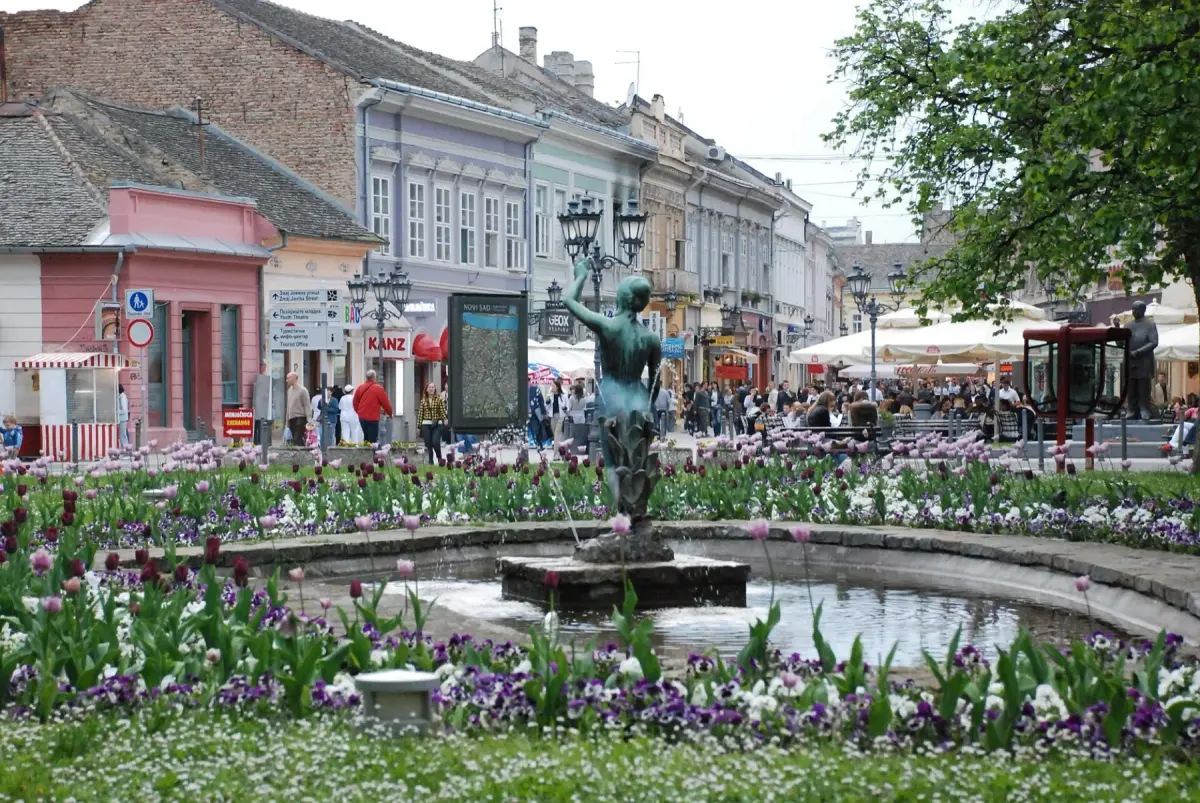
Instead of wide boulevards and endless traffic, you find welcoming squares, pale façades, old trees, and narrow streets that invite you to slow down, leave the map in your pocket, and forget about carefully planned itineraries.
Novi Sad does not feel like a city determined to impress visitors from the very first moment. It does not compete for your attention, try to reveal everything at once, or make you chase from one landmark to the next.
Its historic centre seems designed for wandering without a destination.
You turn into an unfamiliar alley simply because an old streetlamp catches your eye or because the shadows of the trees fall beautifully across the cobblestones.
Liberty Square gradually gives way to pedestrian streets lined with small shops, bookshops, cafés, and restaurants.
Around one corner, a quiet courtyard suddenly appears. Then another. Before long, the city gently leads you back to an open square.
That is what makes Novi Sad feel different.
It does not ask you to plan the perfect route.
It is far more enjoyable to let the city guide you instead.
A City That Never Rushes to Impress
It is surprisingly difficult to explain why walking through Novi Sad feels so enjoyable.
It is not simply the elegant architecture or the well-kept streets.
Everything seems designed around the pace of a person on foot.
The city’s main sights are close together, so exploring never turns into a series of taxi rides or constant navigation from one point on a map to the next.
A few minutes after leaving Liberty Square, you find yourself on Zmaj Jovina Street.
Almost without noticing, you continue onto Dunavska Street.
Soon the streets become greener, and Danube Park appears.
By this point, time hardly seems important anymore.
Someone is reading on a bench.
Someone else lingers over a cup of coffee.
Others simply watch a city that moves at an unexpectedly peaceful rhythm.
It is easy to believe, at this moment, that you have already understood Novi Sad.
It seems like a charming European city where the greatest pleasure is simply walking without rushing.
But continue just a little farther, and the city begins to reveal another side.
Then the Danube Appears
Sooner or later, the streets lead you to the river.
It happens almost without warning.
The buildings gradually step aside.
The space opens up.
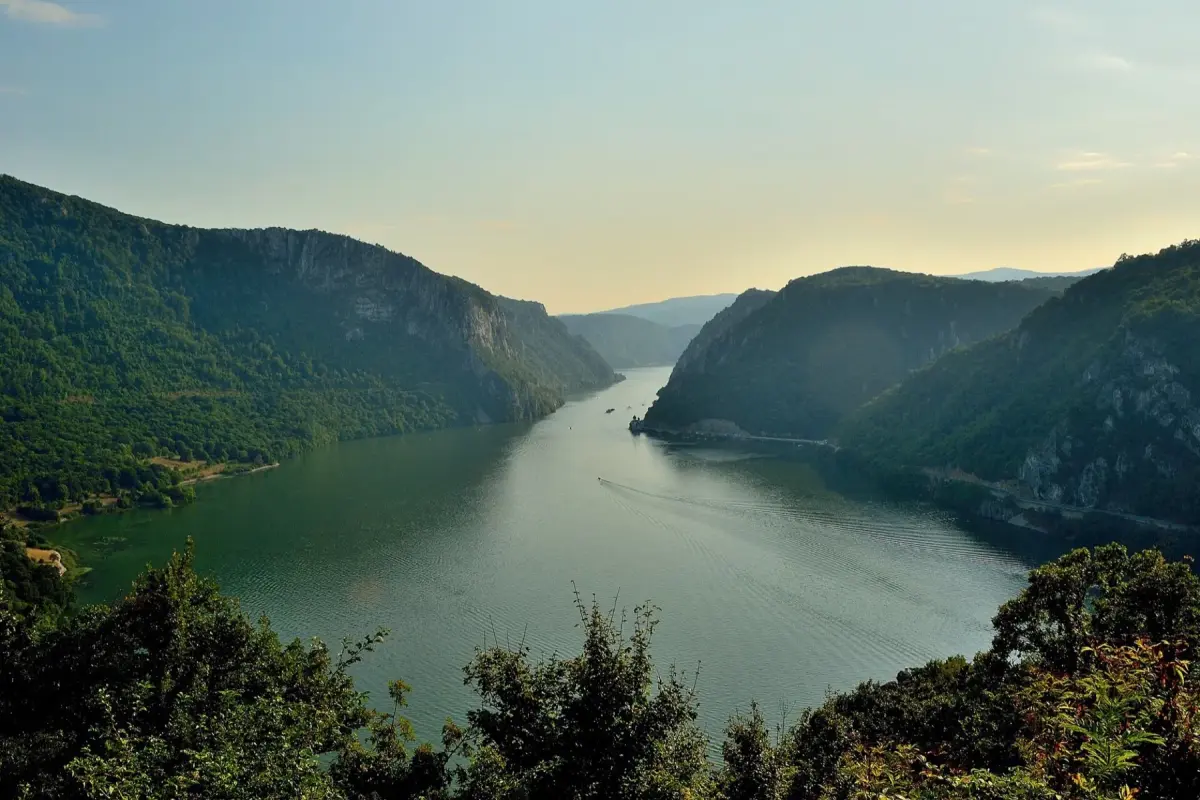
Suddenly, the Danube—the second-longest river in Europe—stretches before you.
“Suddenly, the Danube—the second-longest river in Europe—stretches before you.”
It feels remarkable that only moments ago you were wandering through quiet streets, while now you stand beside a river that has connected countries, cultures, and cities for centuries.
Yet almost immediately your eyes are drawn somewhere else.
Across the river rise the massive walls of Petrovaradin Fortress.
They fit so naturally into the landscape that, at first, they seem part of the hillside itself.
Only after a few seconds do you grasp the scale of the place.
Its enormous bastions have watched over the city for centuries, while their highest points offer sweeping views across Novi Sad.
This is the moment when you want to cross the bridge.
Not because another attraction waits on the opposite bank, but because it feels as though an entirely different story begins there.
The Other Side Feels Like Another World
Crossing the Danube takes only a few minutes.
Yet somehow, it feels much longer.
With every step, the city centre slips farther behind.
Ahead, there is more stone, more old walls, more cobbled roads.
The transition feels so natural that it is impossible to say exactly when an ordinary walk becomes a journey between two different worlds.
If the left bank invited you to linger in cafés and stroll through peaceful streets, the right bank immediately draws your eyes upward.
Your gaze follows bastions, ancient gates, towering walls, and wide terraces from which the Danube appears even more magnificent.
Even the atmosphere changes.
The lightness of the city gives way to a quiet sense of monumentality, as though the fortress itself sets the rhythm of this place.
And yet, its size is not what impresses most.
Far more remarkable is how naturally it has become part of modern life.
People no longer come here because of military victories or historic battles.
They come to watch the sunset.
To sit in cafés.
To look out over the city.
To stay longer than they intended.
Because it is only from here that Novi Sad finally feels complete.
Only Now Do You Understand the City
Only after reaching the opposite bank do you begin to notice what had seemed accidental before.
The city grew directly across from the fortress, and the Danube was never a barrier between them.
It was always the connection.
One bank developed as a place for everyday life, trade, and conversation.
The other remained, for centuries, a symbol of protection and strength.
Today, there is no opposition between them.
They complement one another as naturally as day turns into evening.
Perhaps that is why so many visitors leave Novi Sad feeling as though they have discovered not one city, but two.
One stays in the memory through the aroma of fresh coffee, peaceful streets, and an unhurried atmosphere.
The other remains through its immense fortress walls, sweeping views over the Danube, and a sense of space that can only be understood from above.
What You Shouldn’t Miss
The greatest gift you can give yourself in Novi Sad is not trying to see everything.
It is far more rewarding to let the city set the pace.
Begin your morning in the historic centre.
Walk slowly through Liberty Square and the surrounding pedestrian streets.
Stop at a café.
Spend a little time in Danube Park.
Then make your way to the river and cross the bridge on foot.
Climb up to Petrovaradin Fortress.
Find a place overlooking the city.
Stay there for a while.
More often than not, these simple moments become the strongest memories of the entire trip.
Before You Go
Novi Sad lies less than an hour from Belgrade by high-speed train, making it an easy destination even for a single-day visit.
Almost the entire historic centre can be explored on foot, while moving between the two riverbanks takes only a few minutes.
If time allows, however, stay for another day.
That is when the city begins to reveal the quieter sides that cannot be discovered during a single walk.
Sometimes One Bridge Changes Everything
By the time the journey ends, it becomes clear that the most important moment of the day was neither climbing the fortress nor wandering through beautiful streets.
Everything changed with one simple walk across the Danube.
Before crossing, Novi Sad felt like a charming European city.
Afterwards, it became somewhere with an entirely different character—a place where two separate stories continue to exist side by side, each making the other more fascinating.
Perhaps that is why people want to return.
Not to tick another city off a map.
But to walk once more from quiet streets to the great river, and experience again the moment when Novi Sad truly begins to reveal itself.