No single landmark defines this village — only a collection of small, brick-and-tin details worth noticing.
Argentina is easy to remember through tango, football, and Buenos Aires. But travel beyond the capital, and the familiar image of the country begins to change. Long avenues give way to open fields, brick houses, old railway tracks, and trees that sometimes seem more significant than the buildings around them.
Uribelarrea has no single famous landmark where visitors line up for a photograph. The village reveals itself through small discoveries: an old sign, a tunnel of branches, the unusual geometry of its square, or the story of a building that could easily be mistaken for an ordinary house. This is not a place for ticking sights off a list. It is more rewarding to notice the details that unexpectedly hold your attention.
Walk Beneath a Tunnel of Trees
Near the railway station, branches meet above the tracks and transform the railway into a long green corridor. In summer, it becomes dense and shaded. In autumn, the colors change, while after rain, the darkened ground makes the lines of the railway stand out more sharply.
It is worth coming here even without a camera: walk alongside the tracks, watch the light appear between the leaves, and see the village from a different perspective. Still, it is a good idea to keep your phone nearby. The rails, branches, and receding perspective create a slightly different composition each time.
Walk to the Old Railway Station
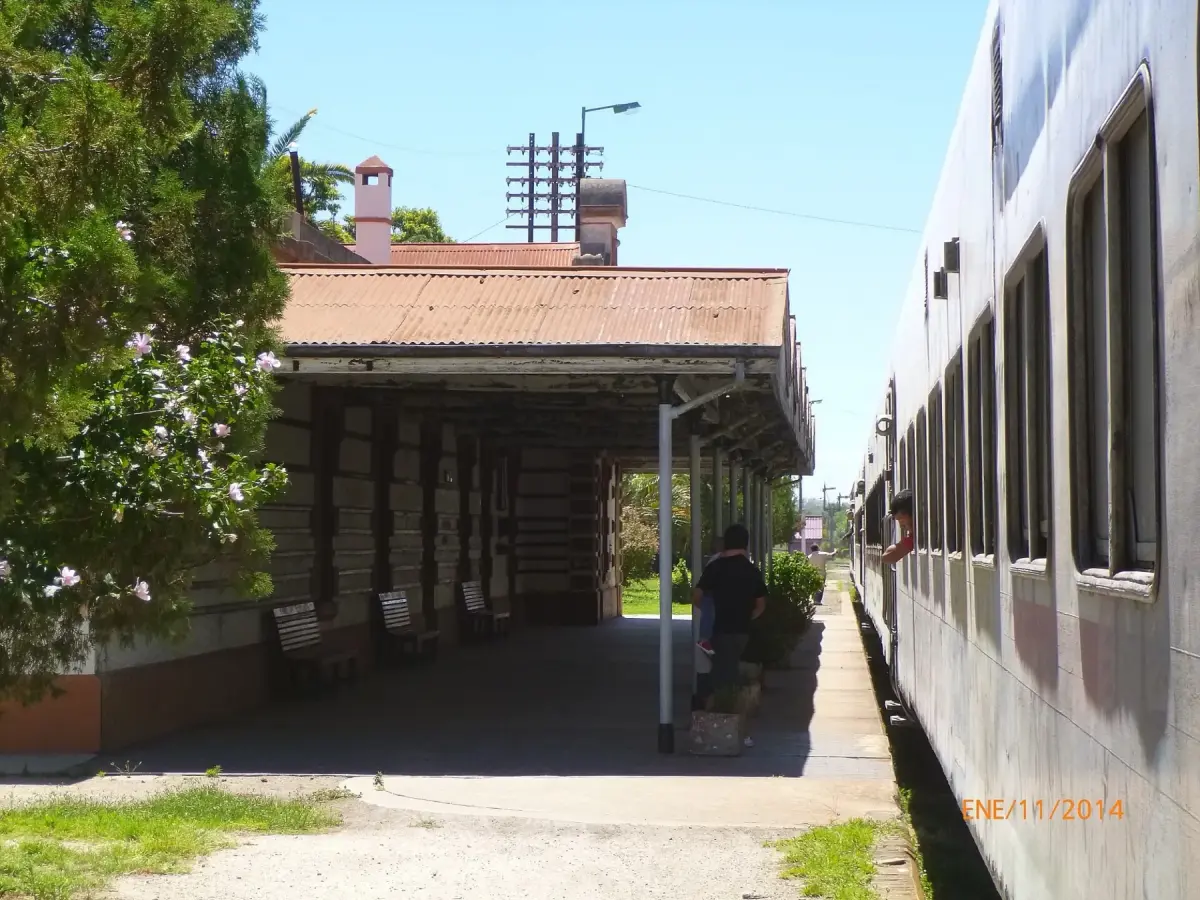
The station is not simply a picturesque backdrop. The railway played an important role in Uribelarrea’s development as an agricultural settlement, allowing local farms to transport dairy products and other goods to neighboring towns.
Today, the station building recalls a time when the arrival of a train shaped the rhythm of village life. Even without a museum exhibition, it is worth examining the platform, the old structures, and the tracks gradually disappearing among the trees.
Look Closely at the Brick Façades and Old Signs
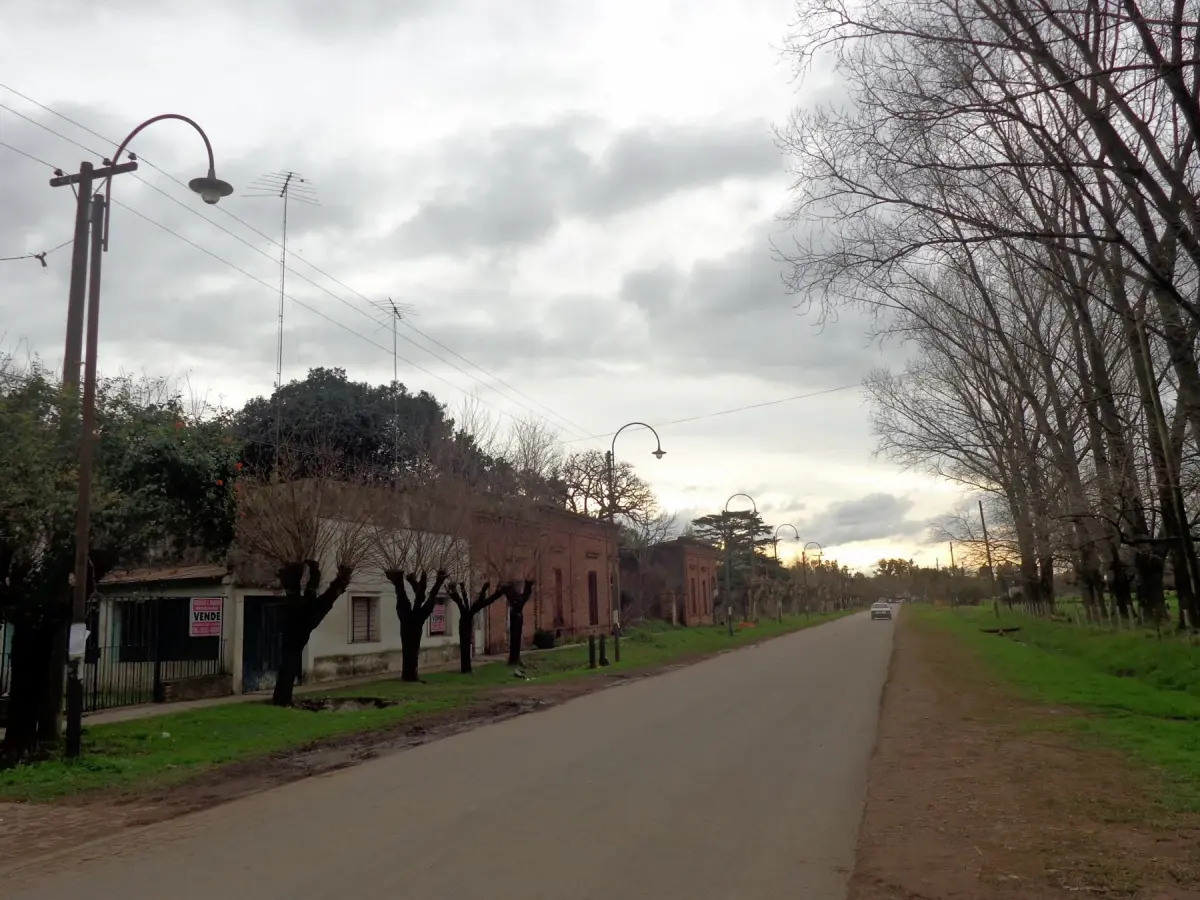
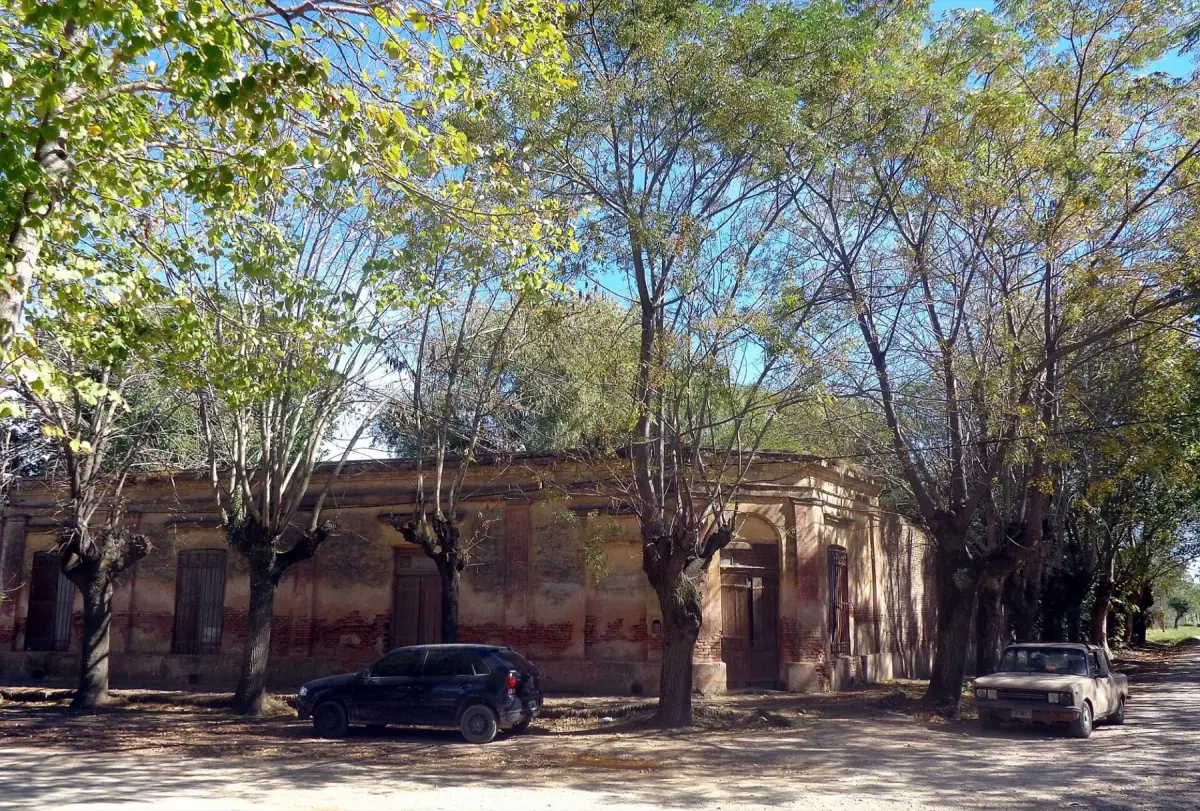
In Uribelarrea, beauty is rarely restored to perfection. It remains in darkened brick, faded paint, wooden doors, and the letters of old signs that can still be read above an entrance.
Some buildings once served as country stores and warehouses. Others have changed very little in purpose. You do not need to understand architectural styles to notice how differently wood, metal, and brick age—and how these imperfect surfaces preserve the past more convincingly than new decorative finishes.
Understand the Design of Plaza Centenario
Uribelarrea’s central square is octagonal. Four short diagonal streets extend from it at an angle, forming part of a plan created in the late nineteenth century by architect Pedro Benoit.
The geometry is easier to understand while walking than by looking at a map. Move to another side of the square, and the same row of houses appears from a different angle. One street directs the eye toward the church, while another seems to cut diagonally across the village. The small space continually changes its perspective.
Learn the Story of the Church
Opposite the square stands Santuario Nuestra Señora de Luján, a Neo-Gothic church built not only for the local parish, but also as a personal memorial. The village’s founder, Miguel Nemesio de Uribelarrea, dedicated it to the memory of his late wife, Manuela Azcuénaga de Uribelarrea. The church opened on December 18, 1890—the anniversary of their wedding.
Historic stained-glass windows survive inside. The church was also used as a filming location for Evita: a scene connected with the childhood of Eva Perón was filmed here. This detail changes the way the building feels. Behind its modest façade are a private love story, the history of the village, and a small piece of cinematic history.
Notice How Old Buildings Continue to Live
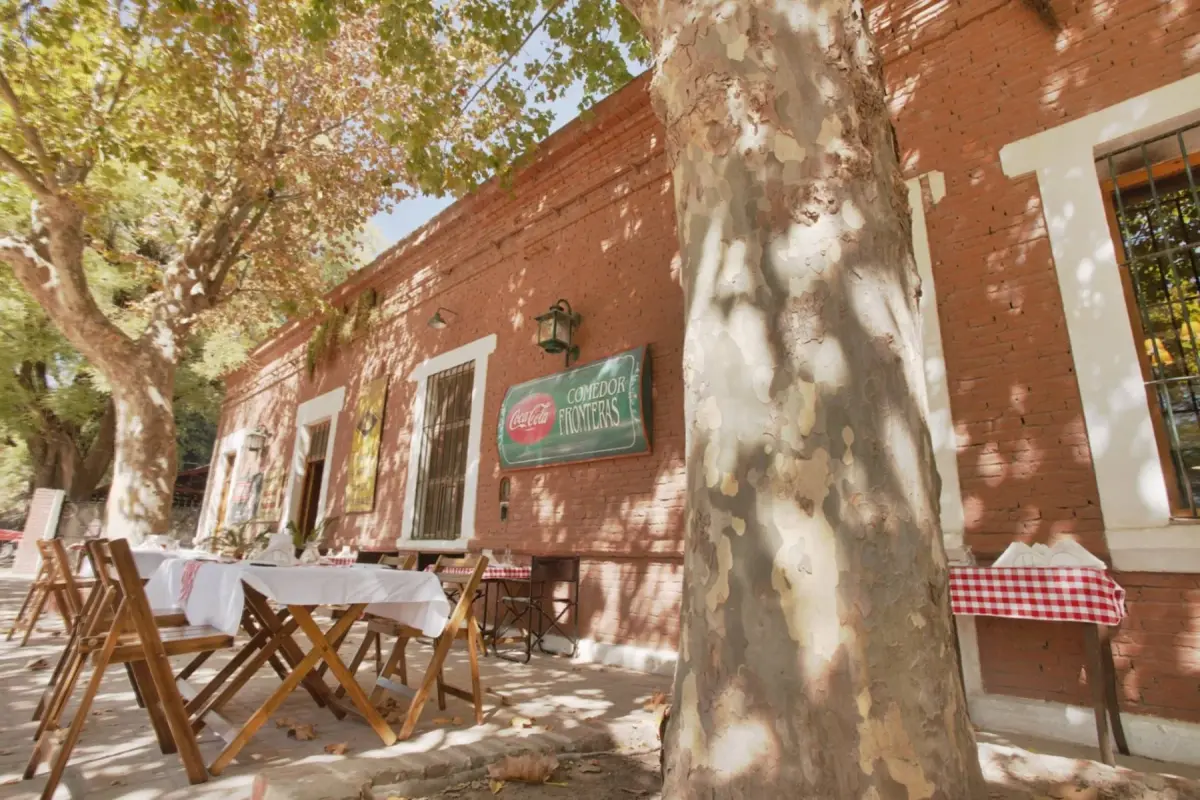
In some towns, historic buildings are turned into museum pieces. In Uribelarrea, they continue to welcome visitors. Restaurants, bars, and small shops operate behind old doors. The past is not separated from the present here: people still meet, eat, and talk within the same brick walls.
One recognizable example is El Palenque, an old rural building near the center of the village. Even if you are not planning a long lunch, it is worth looking at the façade and imagining how many different weekends have unfolded behind those walls.
See the Village Together with the Landscape Around It
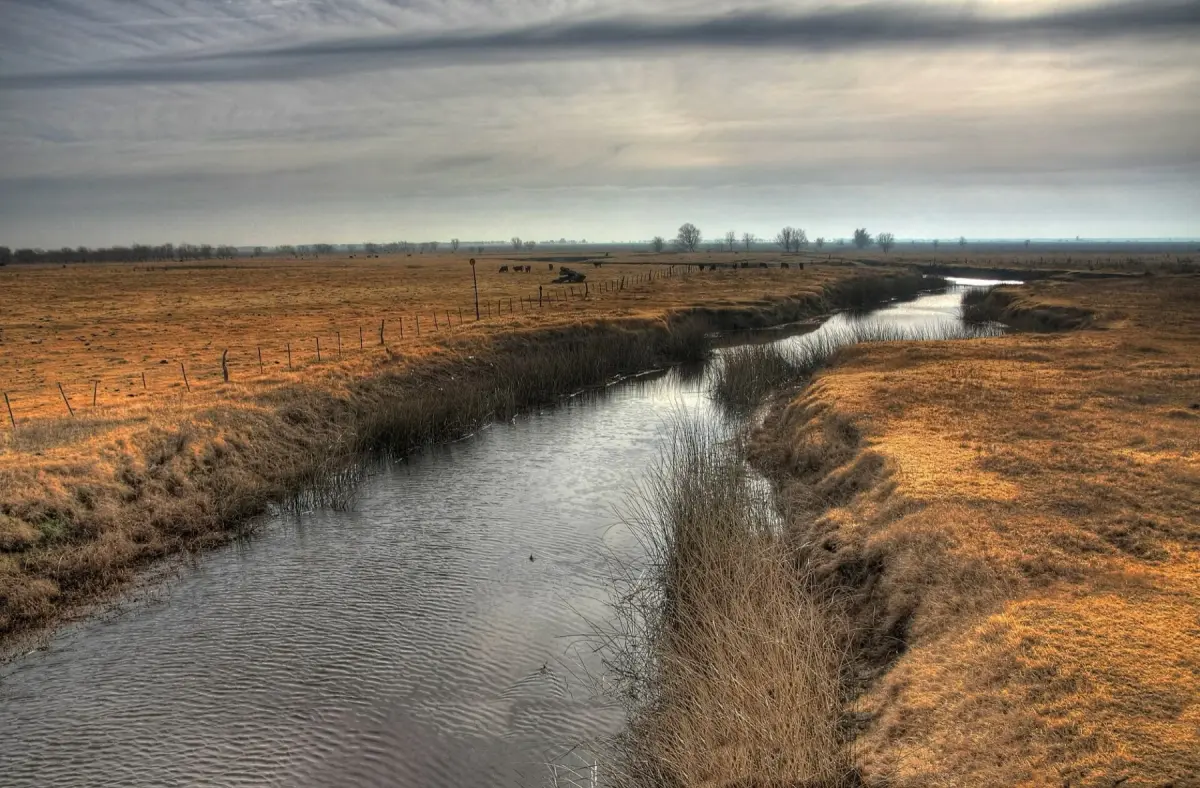
The fields begin almost immediately beyond the final houses. Cows stand beside fences, sheep gather in small groups, horses appear among the trees, and country roads continue toward places where the central square is no longer visible.
These landscapes are not simply a backdrop to Uribelarrea. Without them, the village would be a different place. The fields explain its dairy-farming past, the emergence of local cheesemakers, and the habit of Buenos Aires residents coming here for a weekend in which the sky, rather than a building, occupies most of the view.
Create Your Own Collection of Small Discoveries
Everyone will remember a different Uribelarrea. One person may remember the octagonal square, another the old station, while someone else may notice a bicycle leaning against a brick wall, a flower beside a wooden door, or a brief flash of light across the railway tracks.
The most important detail may not appear in any guidebook at all. It may be too small to become a landmark, yet it is precisely through discoveries like these that a personal image of a place begins to form.
You may not remember Uribelarrea for one famous building, and still return with an entire collection: several façades, branches above the railway, an old sign, a field beyond the last house, and one discovery of your own that was never mentioned in this article.