One of Southeast Asia's few remaining places where wild elephants still cross the road at dusk.
Thailand has no shortage of places where you can “meet elephants.” Tourists are invited to ride them, pose for photos, feed them, or even bathe alongside them. But those are domesticated elephants.
Seeing a truly wild elephant, living freely in its natural habitat, is something entirely different.
Surprisingly, you don’t have to venture deep into remote jungles or travel to the other side of the country. Just a few hours from Bangkok lies Khao Yai National Park, one of the few places in Thailand where such an encounter is genuinely possible. But it is important to be honest from the beginning: nobody can promise it.
This Is Not a Zoo
That is exactly what makes Khao Yai special.
There are no fences, no feeding schedules, and no staff who know where the animals are at any given moment.
An elephant may step onto the road directly in front of your car. Or it may spend the entire day deep in the forest, and you’ll never even know it was nearby.
That unpredictability is what makes every sighting so memorable.
Why Khao Yai?
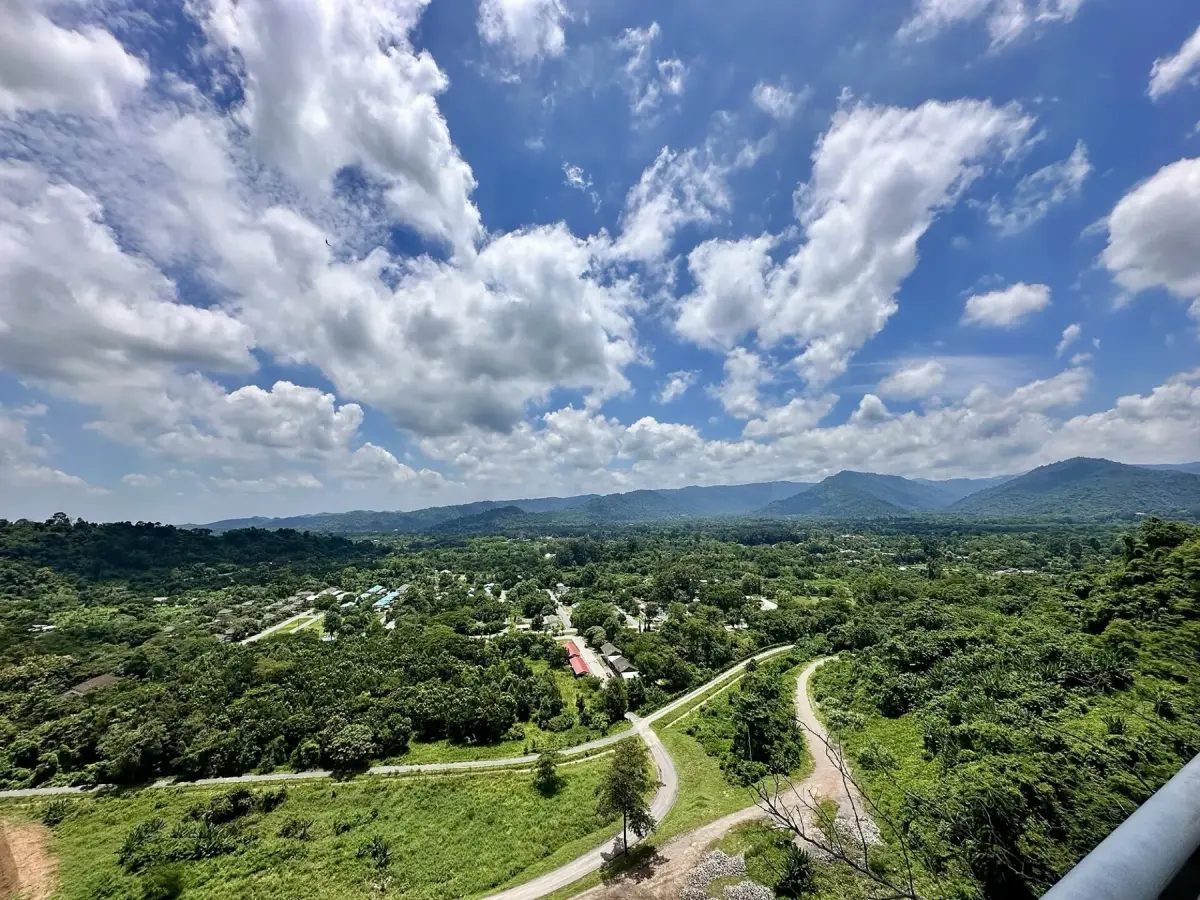
Khao Yai is home to one of Thailand’s largest populations of wild Asian elephants. They roam freely across more than 2,000 square kilometers of protected forest, occasionally appearing near roads, crossing them, or emerging beside open grasslands and watering holes.
There is one fascinating detail that is easy to overlook. It often seems as though the elephants wander onto the roads.
In reality, it is the other way around.
Many of the park’s roads were built across ancient elephant trails that existed long before the first cars arrived. From an elephant’s perspective, it isn’t crossing a road—the road crosses its path.
That is why the park authorities regularly publish guidance explaining how visitors should behave if they encounter an elephant.
What These Encounters Are Really Like
If you picture an African safari, you might imagine animals standing on open plains, patiently waiting for visitors.
Khao Yai is nothing like that.
Sometimes your driver suddenly stops.
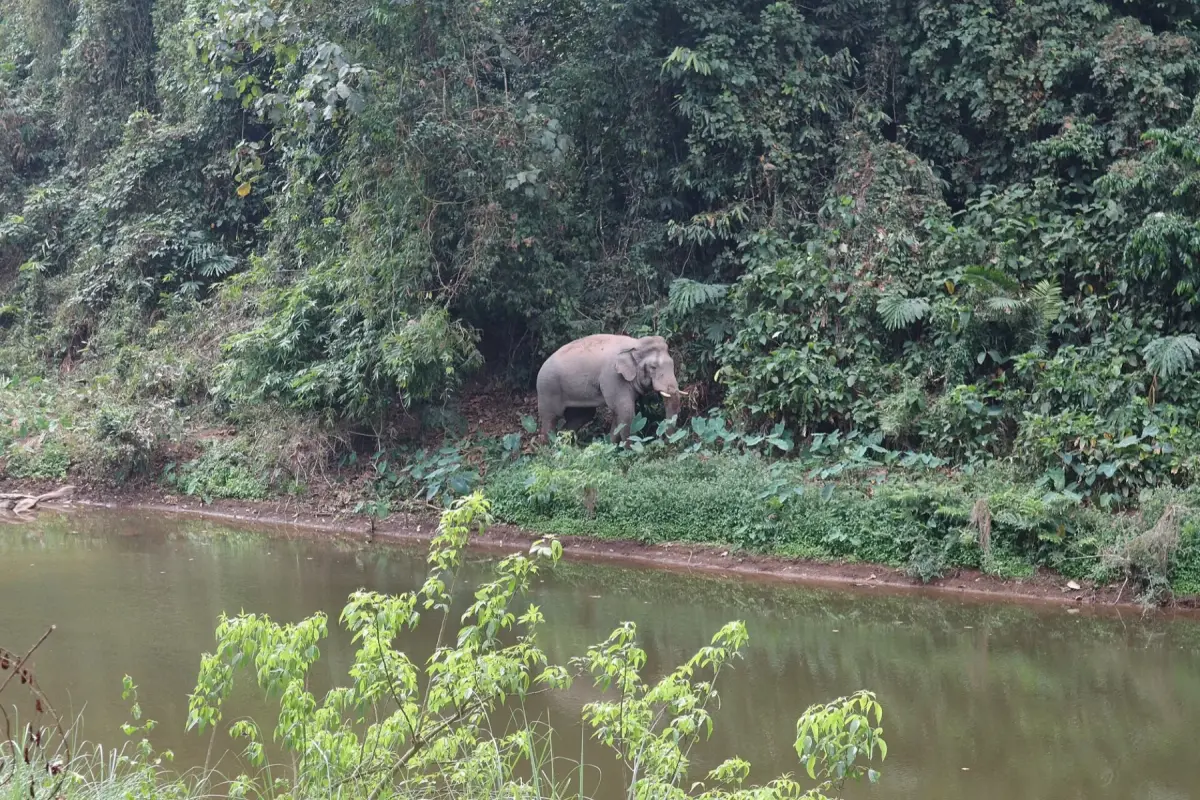
A huge elephant is standing in the middle of the road. It slowly crosses the asphalt, snaps branches from nearby trees, spends a few minutes paying no attention to the waiting vehicles, and then quietly disappears back into the forest.
Sometimes all you see is a broad gray back moving between the trees.
Sometimes only footprints in the mud or freshly broken bamboo.
“Sometimes only footprints in the mud or freshly broken bamboo.”
And sometimes… nothing at all.
That, too, is part of the experience.
Why Nobody Can Promise You’ll See One
It is easy to find photographs online of visitors standing a safe distance from wild elephants in Khao Yai. Looking at those pictures, it is tempting to believe that sightings are almost guaranteed.
They are not.
Even the park rangers do not know where the elephants will be tomorrow. Weather, time of day, season, visitor numbers, and countless other factors all influence your chances.
There are only general patterns. Experienced guides and rangers agree that the odds are usually higher early in the morning and later in the afternoon, when elephants tend to become more active. Even then, there are no guarantees.
Any article that promises you will definitely see a wild elephant is being less than honest.
Ironically, it is this uncertainty that makes every encounter so valuable.
What Should You Do If an Elephant Appears?
The most important rule is surprisingly simple:
Do nothing.
Stay inside your vehicle. Do not approach the elephant. Do not feed it. Do not honk your horn. Do not try to drive around it.
Park authorities recommend stopping at least 30 meters (100 feet) away and patiently waiting until the elephant decides to continue on its own.
There is another piece of advice that often surprises visitors: leave your engine running.
It might seem quieter—and therefore safer—to switch it off. Rangers recommend the opposite. Elephants have become accustomed to the sound of engines, and if one unexpectedly begins approaching your vehicle, you need to be able to reverse slowly without delay.
A wild Asian elephant is an enormous and immensely powerful animal. If it feels threatened, the consequences can be serious.
The safest strategy is patience—and respect for its space.
What If You Don’t See One?
That is entirely possible.
Many visitors spend two or even three days in the park without seeing a single elephant.
Yet few leave feeling disappointed.
Along the way, you may hear gibbons calling high in the canopy, spot deer grazing among the trees, watch macaques beside the road, or glimpse magnificent hornbills flying overhead. Even when the wildlife remains hidden, the forest itself leaves an impression every bit as powerful as any individual sighting.
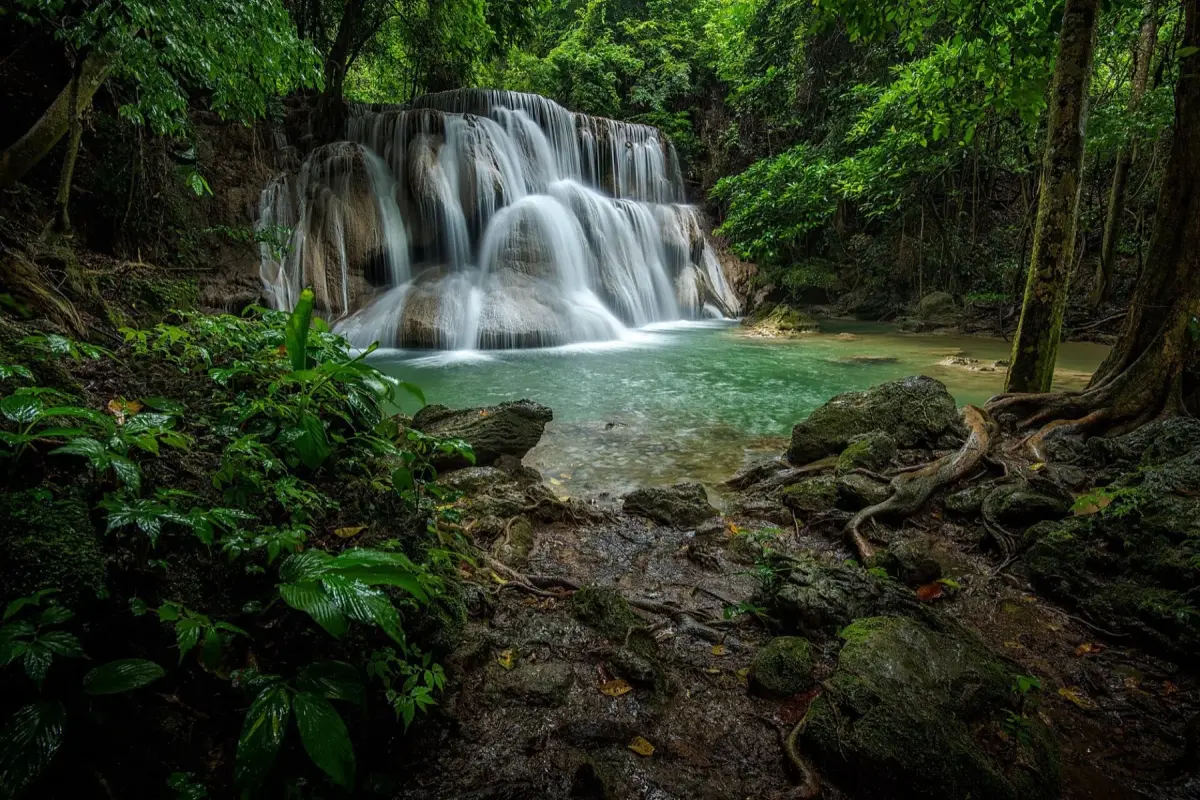
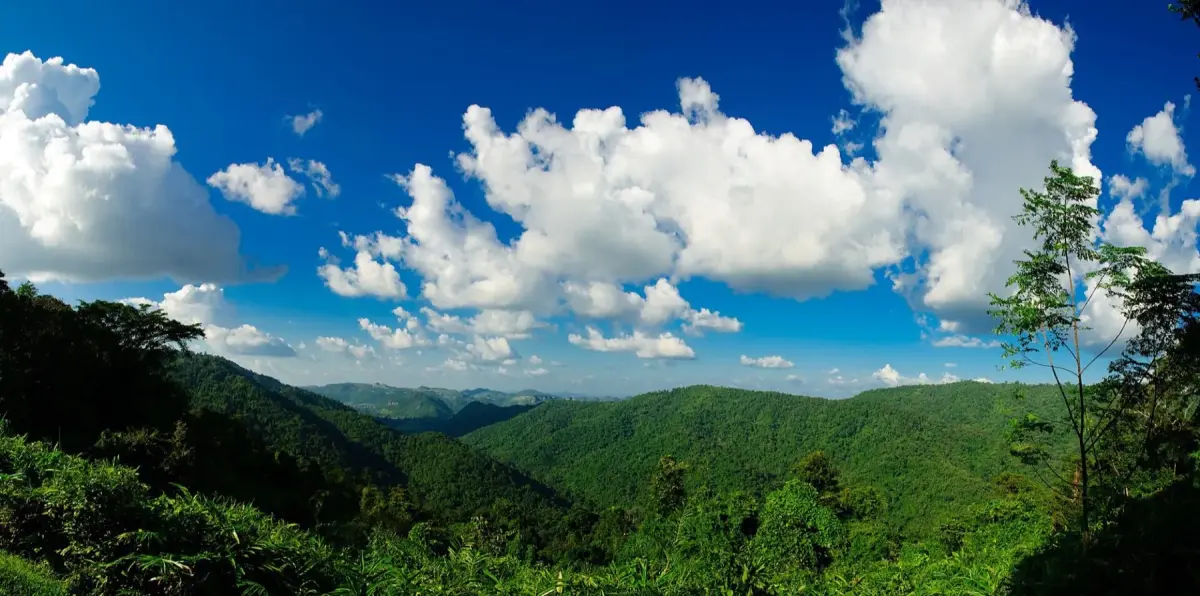
And of course, Khao Yai is also famous for its waterfalls, scenic viewpoints, and cool mountain forests—all of which we explore in a separate article.
Who Is This Trip For?
Khao Yai is perfect for travelers who understand the difference between observing wildlife and visiting an attraction.
If your only goal is to tick the box marked “I saw an elephant,” you may leave disappointed.
But if simply being in a forest where wild elephants roam freely already feels like a meaningful experience, Khao Yai is one of the finest places near Bangkok to visit.
Perhaps that is why photographs of elephants taken here feel so special.
There are no trainers.
No chains.
No performances.
Only a person, a forest, and a moment that cannot be planned.